Easy registration in about 3 minutes!

Sign Out

You have unfinished applications.
Column / 2026.03.02

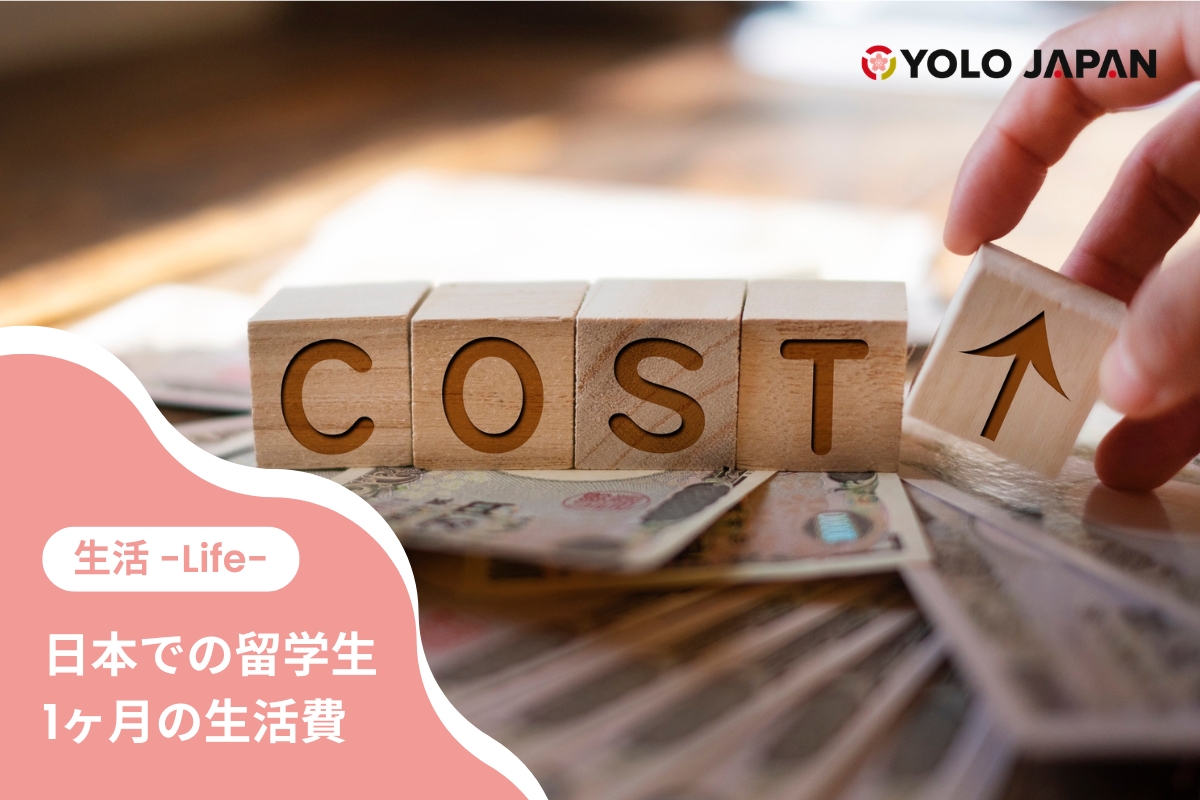
Cost of Living in Japan for International Students

“I’m moving to Japan to study—how much money do I need for one month?”——when it’s your first time living in Japan, it’s hard to picture expenses like rent, food, and transportation, and it’s normal to feel anxious.

On this page, we’ll break down the cost of living in Japan for international students using official data from JASSO (Japan Student Services Organization).
You’ll get a practical monthly budget and a clear breakdown of what costs how much.

Contents

1. How much do international students spend per month? (JPY 130,000–200,000)
2. Monthly cost breakdown: rent, food, utilities, insurance (ranges)
3. Can a part-time job cover living costs? (income estimate)
4. FAQ: cost of living in Japan for international students

Cost of living in Japan for international students: how much per month?

Based on JASSO’s official survey, average monthly spending is around JPY 170,000 nationwide. Depending on where you live, a practical range is about JPY 130,000–200,000 per month.
Tokyo/Kanto tends to be higher, while regional cities are often lower.

Quick monthly guide (rough)

・Tokyo: ~JPY 200,000 / month

・Kanto (wider area including Tokyo): ~JPY 190,000 / month

・Large metro areas like Osaka (Kansai/Kinki): ~JPY 170,000 / month

・Regional cities: ~JPY 130,000–150,000 / month (varies by area)

Key point
The biggest factor is rent. In JASSO’s survey, average monthly housing costs are about JPY 41,000 nationwide and JPY 51,000 in Kanto.
The higher the rent in your area, the higher your overall monthly cost tends to be. Start by checking typical rent prices for the neighborhood you’re considering—it makes budgeting much easier.

Use these numbers as a baseline. Next, we’ll make your budget more concrete by breaking down costs like rent and food.


What do international students spend money on in Japan?

Now that you have a monthly target, let’s make it practical by looking at what you’ll pay for and how much.
Using JASSO’s survey as a guide, here are typical expense categories and realistic ranges.

Housing (rent)

Rent is usually the largest monthly expense. In the JASSO survey, average housing costs are about JPY 41,000 nationwide and JPY 51,000 in Kanto.

Your actual rent depends a lot on whether you live in a studio apartment, a share house, or a dorm.

Typical range: JPY 40,000–80,000 / month

・Regional city + dorm: often in the JPY 40,000–50,000s

・Tokyo studio: JPY 60,000–80,000+ is common depending on area

Food

This varies a lot depending on how often you cook vs. eat out. For many students, JPY 30,000–40,000 is a realistic baseline.

Typical range: JPY 25,000–45,000 / month

・Mostly cooking: JPY 25,000–30,000s

・Frequent eating out: can go above JPY 40,000

Utilities (electricity, gas, water)

Utilities depend on your contract and the season. Costs tend to rise in winter due to heating.

Typical range: JPY 8,000–15,000 / month

※In dorms/share houses, utilities may be included in rent in some cases

Mobile & internet (SIM / Wi-Fi)

You’ll typically pay monthly for your phone plan and sometimes home Wi-Fi. Budget options help keep this down.

Typical range: JPY 3,000–8,000 / month

Transportation

This depends on commuting distance and whether you also travel for a part-time job. Many students use commuter passes.

Typical range: JPY 5,000–15,000 / month

Insurance & medical costs

Depending on your situation, you may enroll in public health insurance (such as National Health Insurance), which helps reduce out-of-pocket medical expenses. Premiums and payment rules differ by municipality, and you should also budget a little for co-pays when you visit a clinic.

Typical range: JPY 2,000–10,000 / month

※Think: insurance premium (varies) + occasional co-pays

Daily items & other spending

Toiletries, detergent, clothing, entertainment, and social spending. This varies widely—but it’s safer to budget some buffer.

Typical range: JPY 10,000–30,000 / month

How much is tuition?

Tuition for language schools varies a lot by school and course, but JPY 600,000–900,000 per year is a common reference range.
That’s roughly JPY 50,000–80,000 per month if you convert it to a monthly average.
If you plan for living costs (~JPY 170,000) + tuition (JPY 50,000–80,000/month), a total budget of about JPY 200,000–250,000/month is a safer expectation.

※Tuition depends on the school, course, and payment schedule. Always confirm the official tuition details for your program.

Summary
Your monthly budget is shaped mainly by fixed costs (rent, mobile/internet, insurance premiums, basic utility fees), and you can fine-tune it through variable costs (food, entertainment, shopping). Start with rent in your target area, then plug in the ranges above to build a realistic monthly plan.



Can a part-time job cover your living costs in Japan?

For many international students, part-time income can realistically cover part of your monthly living costs. However, because there are legal working-hour limits, plans can fall apart if you assume you’ll pay all living expenses through part-time work alone.

Key points

・International students are generally limited to up to 28 hours per week (and up to 8 hours per day during long school breaks)
・Estimate your monthly cap with hourly wage × hours
・Think of part-time work as a supplement, not your entire budget

Working rules for international students

If you’re on a “Student” status of residence, you generally need Permission to Engage in Activity Other Than That Permitted to work. The standard limit under a blanket permission is up to 28 hours per week (and up to 8 hours per day during long breaks).

Hourly wage: use the minimum wage as a safe baseline

Wages vary by prefecture and job type. If you’re unsure, start with Japan’s minimum wage for your area as a realistic baseline. Japan’s Ministry of Health, Labour and Welfare publishes the official regional minimum wage list.

Monthly income estimate (based on 28 hours/week)

To keep things simple, here’s a monthly estimate if you work 28 hours per week (gross, before deductions). Using the nationwide weighted-average minimum wage as a benchmark, around JPY 130,000 per month is a useful reference point.

Examples (rough)

・JPY 1,121/hour (nationwide weighted average) × 28 hours/week → ~JPY 136,000/month

・JPY 1,200/hour × 28 hours/week → ~JPY 140,000–150,000/month

※Monthly conversion uses “weekly hours × ~4.3 weeks.” Actual income varies by shifts, busy seasons, and days off.
※Take-home pay may be lower due to taxes and other deductions.

Think “support,” not “everything”

If your living costs are around JPY 170,000/month, covering the full amount with part-time work alone can be tight. A safer approach is to decide what you want to cover—for example, rent + part of your food budget—and plan from there.

Tips for finding a job

・Prioritize a schedule you can keep alongside classes, not just the number of workdays
・Choose jobs that clearly fit your visa/permission conditions
・If Japanese is a concern, start with workplaces experienced in hiring international staff

If you want an efficient way to search for part-time jobs that are friendly to international students, using a job site with filters can help. YOLO JAPAN has part-time listings that are easier for international residents and students to apply for.


FAQ: cost of living in Japan for international students

Q. How much money do international students need per month in Japan?

A. In JASSO’s official survey, average monthly spending is around JPY 170,000. Depending on rent and location, budgeting JPY 130,000–200,000 per month is a practical range.

Q. Is Tokyo really that expensive?

A. Tokyo tends to be more expensive mainly because rent is higher. If you rent a private studio, your monthly budget may be JPY 10,000–30,000 higher than in many regional cities. In most cases, the difference comes down to housing costs.

Q. Can I live on JPY 100,000 per month?

A. Given the nationwide average is around JPY 170,000/month, JPY 100,000 alone is usually very difficult. Unless you have unusually low rent (e.g., certain dorm arrangements), it’s likely to fall short.

Q. Can I cover my living costs with a part-time job?

A. Because international students are generally limited to 28 hours per week, covering your entire living budget through part-time work can be tight. It’s more realistic to treat part-time income as a way to cover part of your monthly costs.

Q. Do I pay tuition every month?

A. Payment schedules vary by school. Some programs charge in larger blocks (e.g., per term or per year). As a rough reference, JPY 600,000–900,000 per year (about JPY 50,000–80,000/month when averaged) is a common range for language schools. Make sure you confirm when tuition is due, not just the total amount.

The best way to reduce anxiety is to separate the average from your personal situation. Start with rent in your target area, build a monthly budget using ranges, and use part-time work to fill the gap when needed.