


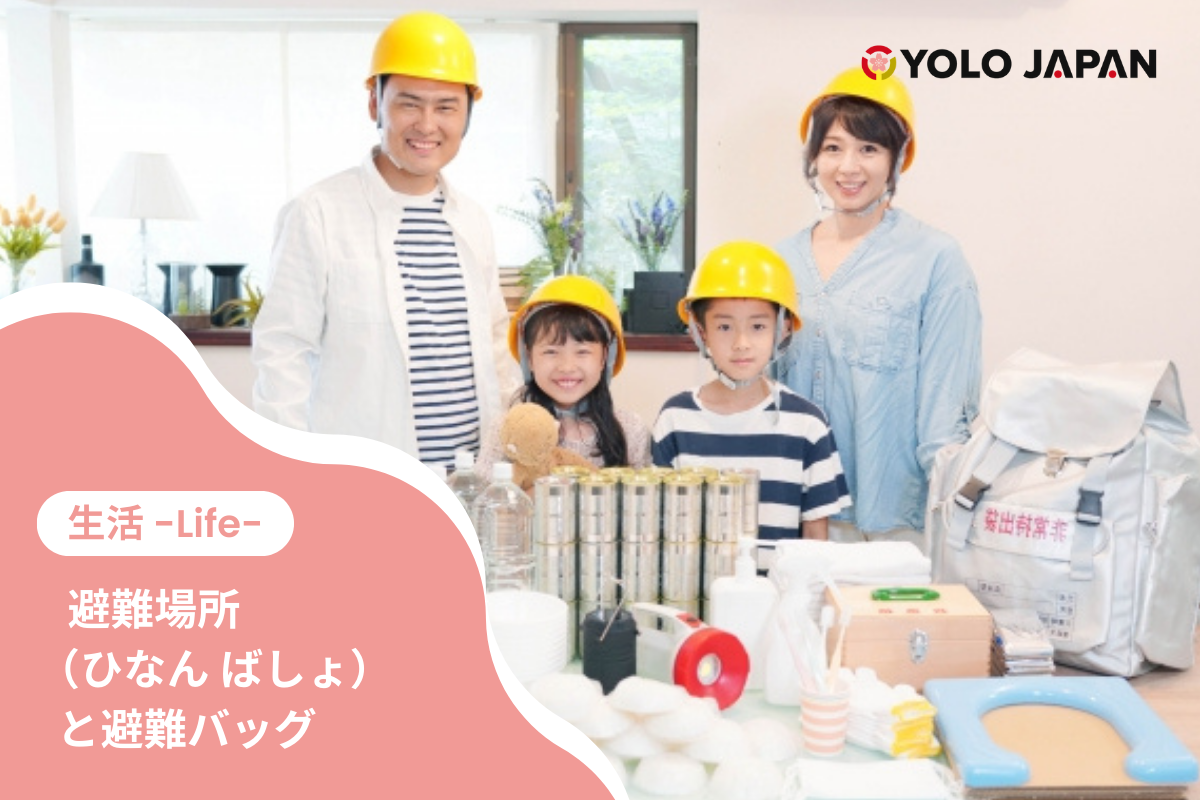
In Japan, natural disasters such as earthquakes and typhoons happen frequently.
When a disaster occurs, it’s important to know where to evacuate and to have an emergency bag ready.
This article explains evacuation sites in Japan and what to pack in your emergency bag.
What is an Evacuation Site?
An evacuation site is a safe place to go during a disaster.
Common evacuation sites include schools, parks, and community centers.
Check which evacuation site is closest to your home and how to get there.
What is an Evacuation Shelter?
An evacuation shelter is a place where you can stay for several days after a disaster.
Gymnasiums at schools or public halls are often used as shelters.
Anyone can use them, so be sure to know the nearest one to your area.
How to Prepare Your Emergency Bag
Your emergency bag should be easy to carry and ready to grab in case you need to leave quickly. Here’s what to pack:
・Mobile phone and charger
Power may be out during a disaster. Bring a portable battery charger. Solar-powered or battery-operated chargers are also useful.
・Water
One person needs about 3 liters of water per day. Prepare enough for at least 3 days, or ideally up to a week.
・Food
Choose non-perishable and ready-to-eat items. Recommended: canned food (fish, vegetables, fruit), ready-to-eat rice, biscuits, chocolate, and nutrition bars. If you have allergies or dietary restrictions (halal, vegetarian, etc.), pack foods that suit your needs.
・Flashlight
Electricity may be out at night. A flashlight or headlamp is helpful. Don’t forget extra batteries.
・First aid kit
Pack bandages, gauze, masks, disinfectant, and your regular medications. Pain relievers or cold medicine can also be helpful. Check expiry dates regularly.
・Cold weather items
It can be cold in shelters, even in summer. Bring a blanket or an emergency heat sheet (lightweight thermal blanket).
・Important documents and cash
Carry your passport, residence card, and bank book. Having copies is a good idea. Prepare cash, including coins, as ATMs may not work.
・Clothing
Include underwear, socks, T-shirts, pants, and a raincoat or compact umbrella. Pack extra towels as well.
Tip: Keep extra food and water at home to last at least one week in case you cannot go outside.
What to Do Before a Disaster Happens
・Secure furniture and appliances to prevent them from falling.
・Check your emergency bag and food supplies regularly.
・Find out where your local evacuation sites and shelters are.
・Make a plan with your family about where to meet and how to contact each other.
Special Tips for Families and Pet Owners
If you live with children, elderly people, or pets, prepare items to match their needs.
For example, bring extra diapers, baby formula, medicine, or pet food and a carrier.
Disaster Guide from Osaka City
Osaka City, where YOLO JAPAN is located, has created a disaster preparedness leaflet for families with children.
It's available in Japanese, English, Korean, Chinese, Vietnamese, and Nepali. Residents of Osaka should take advantage of these resources.
Japanese / English / Korean / Chinese / Vietnamese / Nepali
Work and Live Safely in Japan
Being prepared for disasters is part of living safely in Japan. If you’re working in Japan, peace of mind during emergencies is essential.
YOLO JAPAN offers many jobs with support for foreign residents.
>> Register Now (Free)
>> Browse Jobs by Category




 English
 Chinese
 Korean
 Japanese
 Vietnamese
 Portuguese